Global PM Ranking #51 | Bret Taylor: Rewrote Google Maps in One Weekend, Invented the 'Like' Button, and Became Silicon Valley's Ultimate Fixer
Every day, billions of people interact with two foundational inventions without knowing they came from the exact same product manager before he turned 28:
- Whenever you click and drag a digital map smoothly across your screen without the webpage reloading, you are using the AJAX slippy-tile engine he rewrote in a single weekend at age 25;
- Whenever you tap the “Like” button on any social network on earth, you are using the one-click feedback primitive he invented at age 27.
Ranked #51 on our Global Product Manager Leaderboard (86 OVR), Bret Taylor is the rarest archetype in technology: a builder who can write legendary production code over a weekend and later chair the boards of Twitter, Salesforce, and OpenAI during their most existential crises.
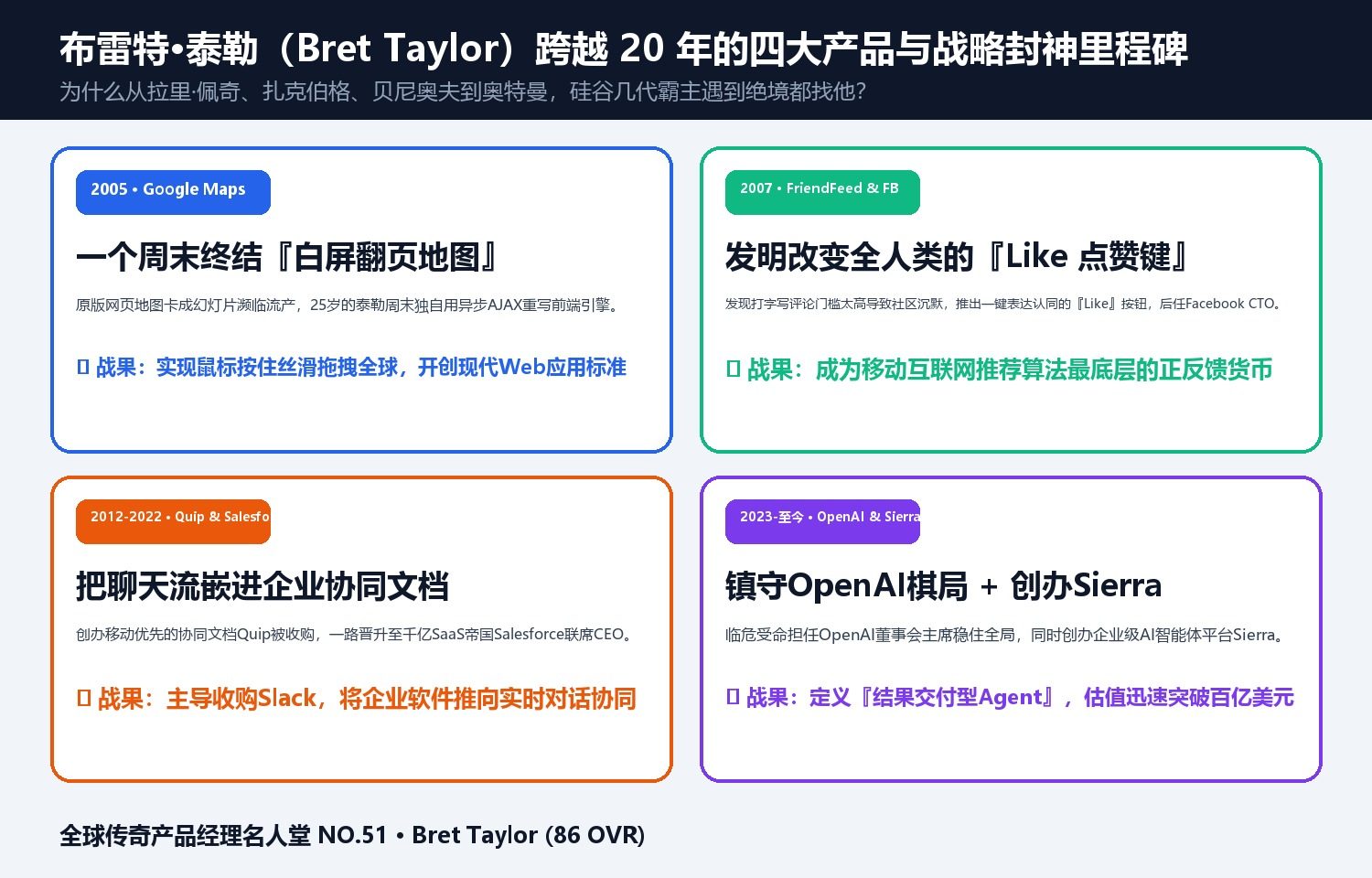
1. The 2005 Weekend Miracle: Rewriting Google Maps in AJAX
In late 2004, online maps (MapQuest and Yahoo Maps) were static images surrounded by North/South/East/West arrows. Clicking an arrow triggered a jarring 5-second full-page browser refresh. When Google’s initial web port of its acquired C++ map desktop software bogged down in browser compatibility bugs, 25-year-old Associate Product Manager Bret Taylor didn’t schedule a committee meeting.
Over a single weekend, fueled by Red Bull, Taylor rewrote the entire Google Maps frontend in clean JavaScript using asynchronous background tile fetching (AJAX). When Google Maps launched in February 2005, users could grab the map and pan across continents seamlessly. That single weekend didn’t just win the mapping wars—it proved that browser applications could rival native desktop software.
2. Inventing the “Like” Button: Eliminating 99% of Social Friction
In 2007, Taylor co-founded FriendFeed alongside Gmail creator Paul Buchheit (#49). Watching users read friends’ updates, Taylor noticed a massive friction gap: people wanted to acknowledge a friend’s milestone, but typing a comment took too much effort, so 90% scrolled past in silence.
In October 2007, Taylor shipped a simple one-click “Like” button under every post. Engagement exploded 10x. Mark Zuckerberg acquired FriendFeed for $50M in 2009, appointed Taylor CTO of Facebook, and deployed the Like button across 3 billion users—creating the primary feedback signal that powers modern recommendation algorithms.
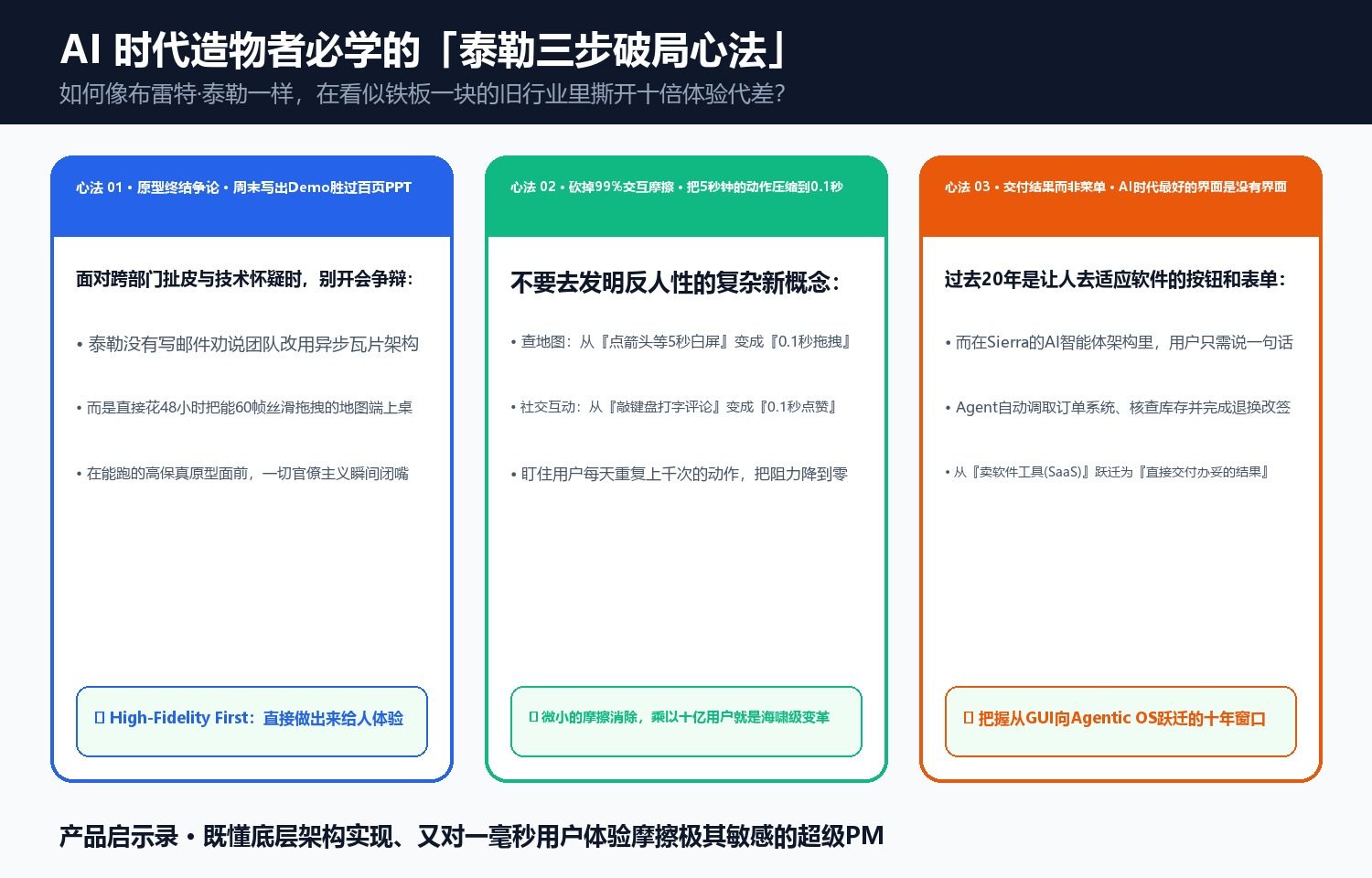
3. Three Takeaways for AI-Era Product Builders
- A working prototype beats 100 slides of debate: Taylor didn’t write a memo arguing for asynchronous map tiles; he built it over a weekend and let the 60fps drag experience end the argument.
- Great features compress 5-second chores into 0.1-second reflexes: Both draggable maps and the Like button succeeded by removing 99% of interaction friction from high-frequency human behaviors.
- In the AI era, the product is the outcome, not the interface: At his AI unicorn Sierra, Taylor is pioneering conversational agents that don’t just show users menus, but actually execute refunds, exchanges, and workflows end-to-end.
Discussion