A Japanese Engineer Invented the QR Code Over a Game of Go — Then Waived Billions in Patents and Transformed China
Every day across China, over a billion transactions pass through a tiny square grid anchored by three concentric corner boxes. Yet the QR Code (ranked #52 on our 100 Greatest Products) was not invented by a fintech giant—it was born in 1994 inside a Toyota parts subsidiary (Denso Wave) by a two-person team led by Masahiro Hara.
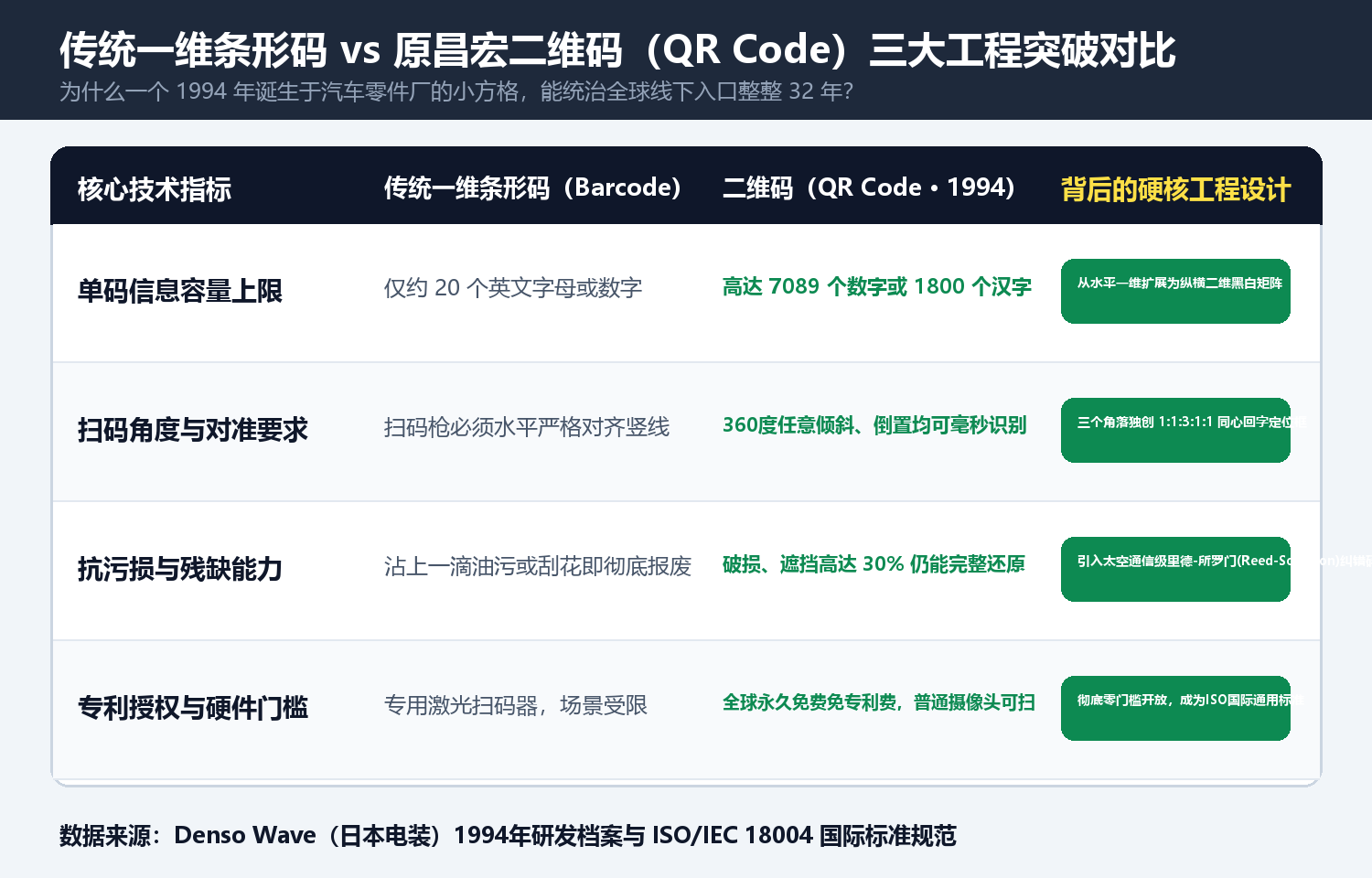
Inspired by stones on a Go board during lunch, Hara analyzed thousands of printed newspapers and forms to discover a black-and-white thickness ratio—1:1:3:1:1—that almost never occurs in natural typography, allowing scanners to lock onto the code from any 360-degree angle in milliseconds while Reed-Solomon error correction recovers up to 30% smudged data.

Most remarkably, Denso Wave chose never to enforce its patent rights on standard QR codes—turning a humble factory parts label into the zero-cost physical hyperlink that powered China’s mobile payment revolution.
Discussion