Product #45 · WeChat Red Packets (2014): How a 9-Person Team Coded a Thousand-Year Tradition and Completed a Decade of Bank-Card Onboarding in One Night
In the history of consumer tech, no cold-start growth campaign was ever executed more cleanly than WeChat Red Packets (微信红包) during the 2014 Lunar New Year.
At the end of 2013, Alipay was the undisputed king of Chinese digital payments, backed by a decade of e-commerce escrow infrastructure. WeChat Pay was only months old, and 95% of WeChat’s chat users saw no reason to type a 19-digit bank card number into a messaging app.
Then a 9-person internal team built a lightweight HTML5 mini-app in two weeks. Over the 2014 Spring Festival, without spending a single dollar on user subsidies, it triggered an avalanche of voluntary bank-card bindings—prompting Alibaba founder Jack Ma to call it a “Pearl Harbor attack executed to perfection.”
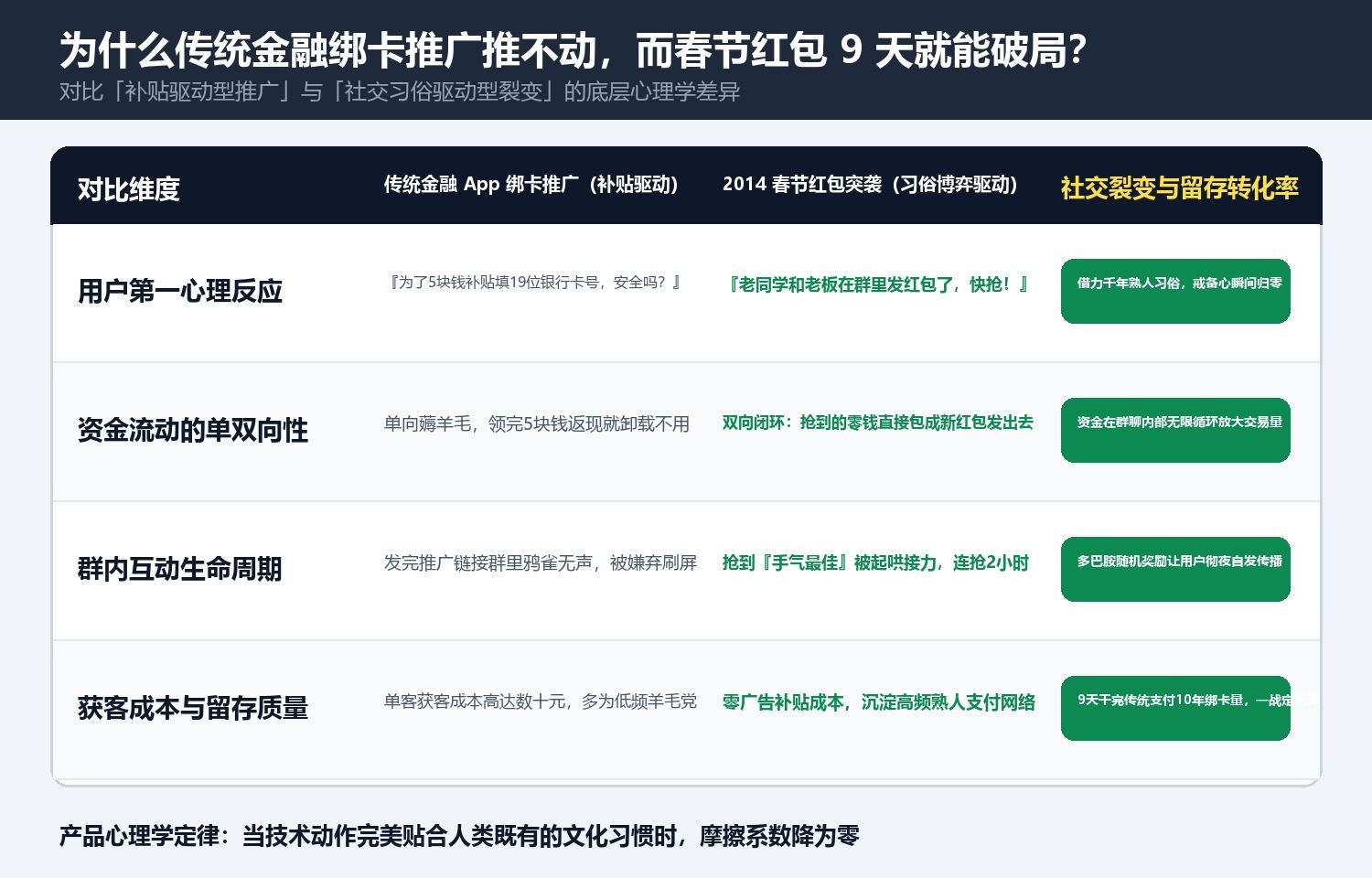
1. Borrow a Gesture People Already Make Every Year
Traditional fintech apps tried to bribe users with $1 coupons to link their bank cards—triggering immediate security anxiety. WeChat Red Packets borrowed a thousand-year-old cultural ritual: gifting red envelopes of cash to family, friends, and colleagues during Lunar New Year.
2. The Real Genius: The “Lucky Draw” Random Split Algorithm
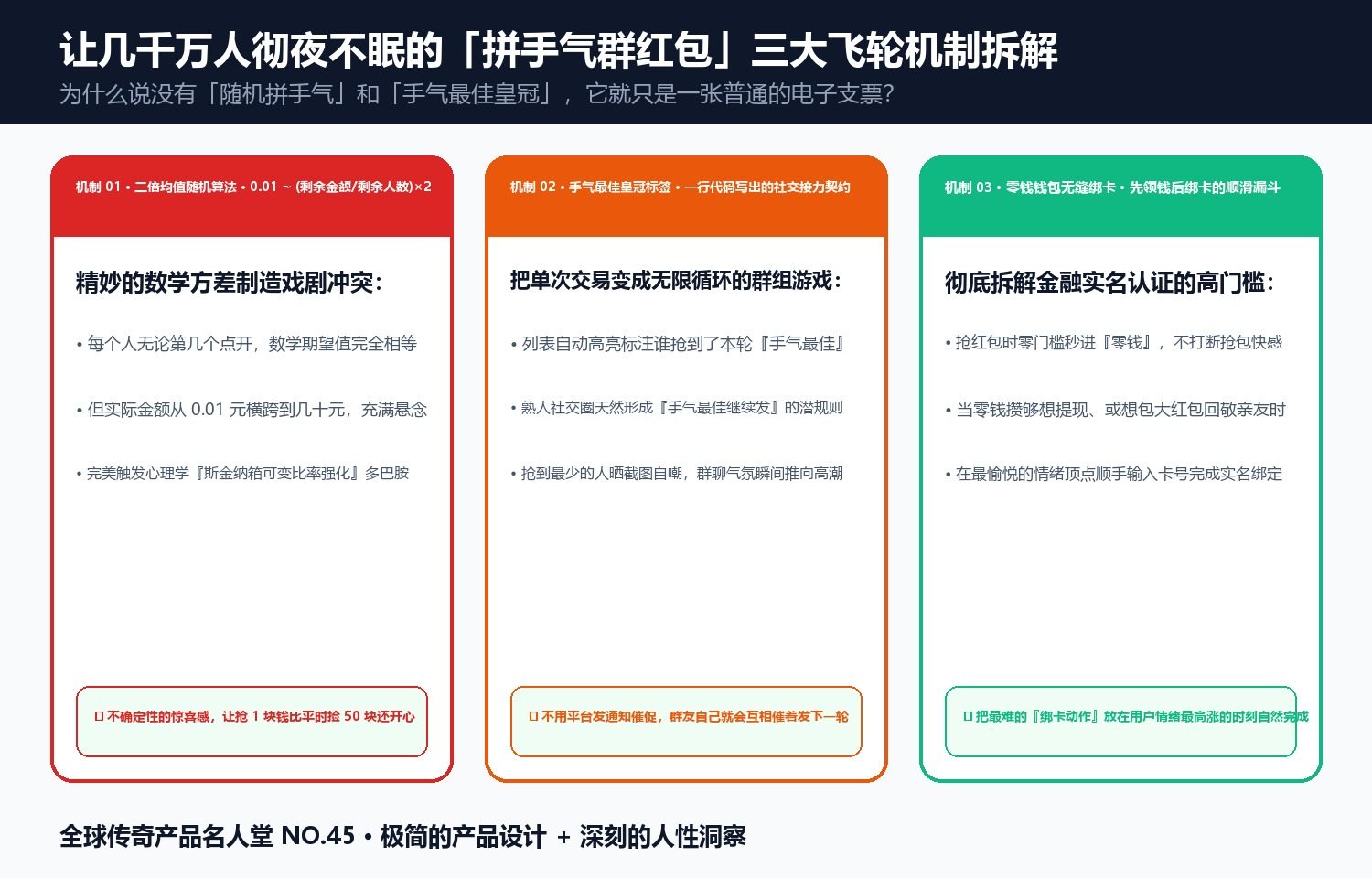
If WeChat had merely built a fixed peer-to-peer transfer tool, group chats would have gone quiet in 30 seconds. The stroke of genius was the “Lucky Draw Group Red Packet” (拼手气红包) powered by the Double-Mean Random Algorithm (0.01 ~ (Remaining / Count) × 2):
- One person sends $20 split randomly into 10 packets.
- Someone grabs $6.50 (crowned “Luckiest Draw / 手气最佳”), while another grabs $0.02.
- The group chat erupts in laughter, and social convention dictates that the “Luckiest Draw” winner must fund the next Red Packet—turning a one-off payment into an infinite, self-sustaining social game.
Discussion