Global Product Ranking #44 | Air Jordan (1985): How a $5,000-a-Game NBA Fine Turned Rubber Sneakers into a $6.6B Cultural Asset Class
Before 1985, athletic shoes were disposable tools made of rubber and leather. You bought them for traction, wore them until the soles flattened, and threw them away. Nobody displayed sneakers in glass cases, camped outside stores overnight, or traded them like financial equities.
Then came April 1985.
- Nike’s internal target for the Air Jordan 1 was to sell $3 million over four years;
- Instead, it sold $126 million in its first 12 months alone (42x expectations);
- Four decades later—more than 20 years after Michael Jordan’s final NBA game—Jordan Brand still generates $6.6 billion in annual revenue for Nike, paying Jordan over $330 million a year in royalties.
Ranked #44 on our Global Legendary Products Leaderboard (88 OVR), the Air Jordan didn’t just win the sneaker wars—it invented the modern cultural asset class.
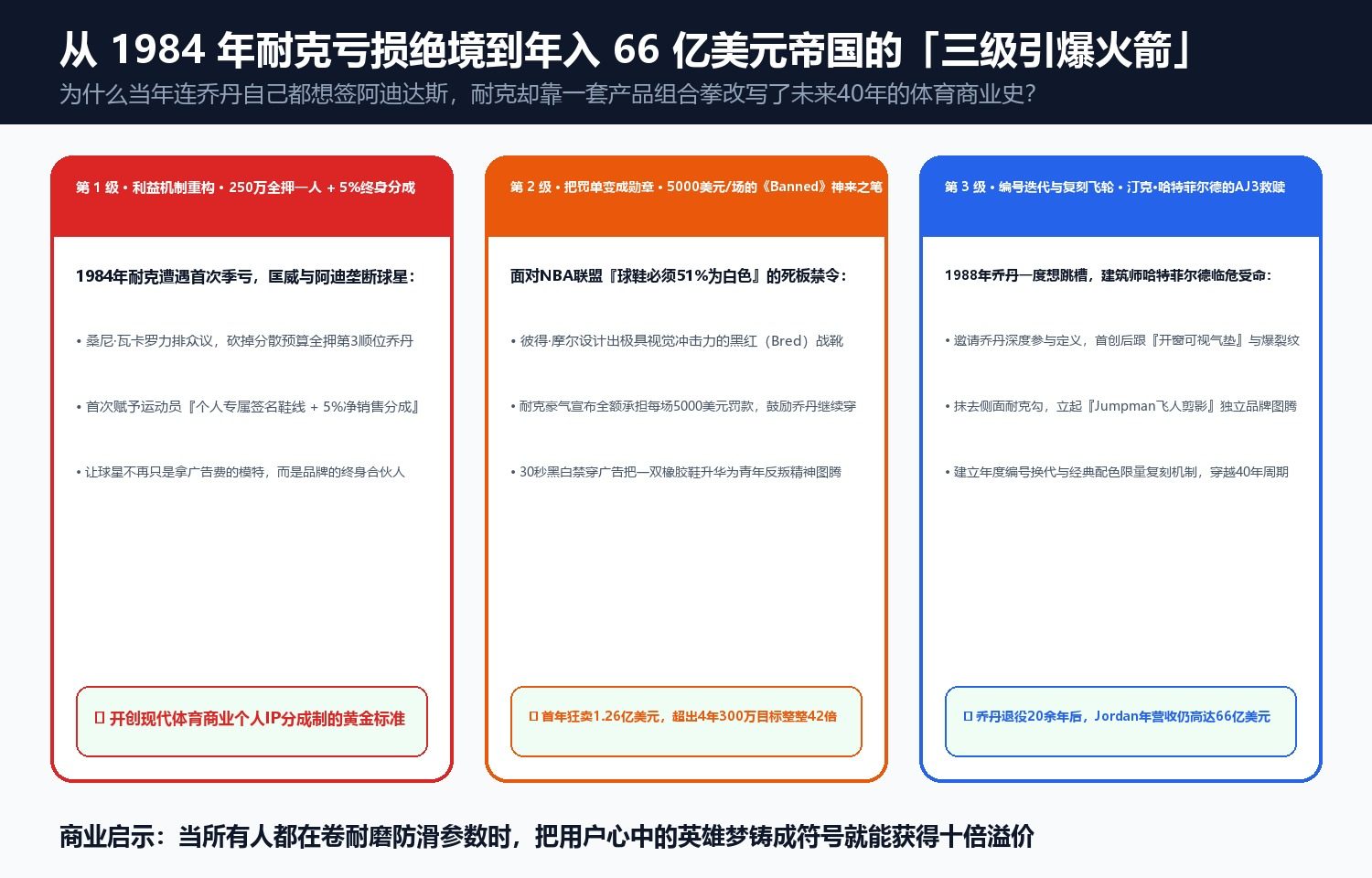
1. The All-In Bet: Naming an Entire Line After a Rookie and the 5% Royalty
In 1984, Converse owned the NBA (Magic Johnson, Larry Bird) and Adidas owned street credibility—even rookie Michael Jordan wanted to sign with Adidas. Facing its first quarterly loss, Nike made an unprecedented structural move orchestrated by Sonny Vaccaro and Peter Moore:
- Instead of paying ten players to wear generic team shoes, Nike put its entire $2.5M budget on Jordan and named the product line itself Air Jordan;
- Even more radically, Nike granted Jordan a 5% lifetime royalty on every pair sold—permanently aligning the athlete’s personal mythos with the product’s commercial compounding.
2. Turning a $5,000 NBA Fine into the Ultimate Rebel Badge
To make the shoe pop on television against a sea of mandatory white sneakers (the NBA’s “51% white rule”), Peter Moore designed the defiant black-and-red (“Bred”) colorway. When NBA Commissioner David Stern threatened a $5,000 fine every time Jordan wore them on court, Nike gladly offered to pay every fine and aired the legendary “Banned” commercial: “On October 18th, the NBA threw them out of the game. Fortunately, the NBA can’t stop you from wearing them.”
Overnight, wearing Air Jordans wasn’t about ankle support—it was about wearing defiance and flight on your feet.
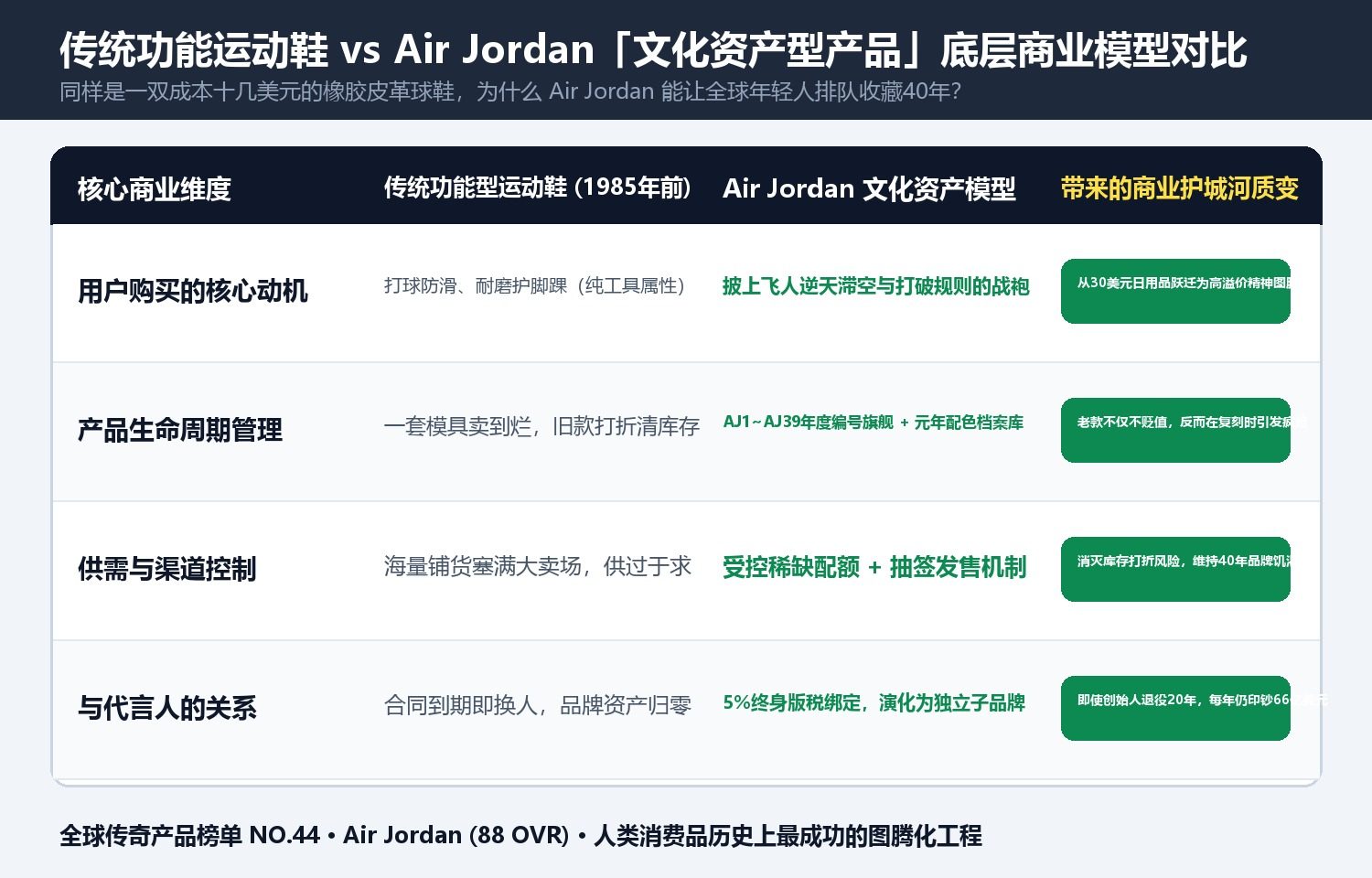
3. Tinker Hatfield’s Annual Numbered Flagship & Retro Scarcity Flywheel
With the Air Jordan 3 (1988), designer Tinker Hatfield introduced visible Air, elephant print, the iconic Jumpman silhouette, and the numbered annual release model (AJ1 through AJ39+)—turning sneakers into annual flagship launches decades before the iPhone, backed by controlled “Retro” vault releases that made sneakers an appreciating collectible for generations.
Discussion